Cassoulet

Sunday Dinner – 15 April 2018
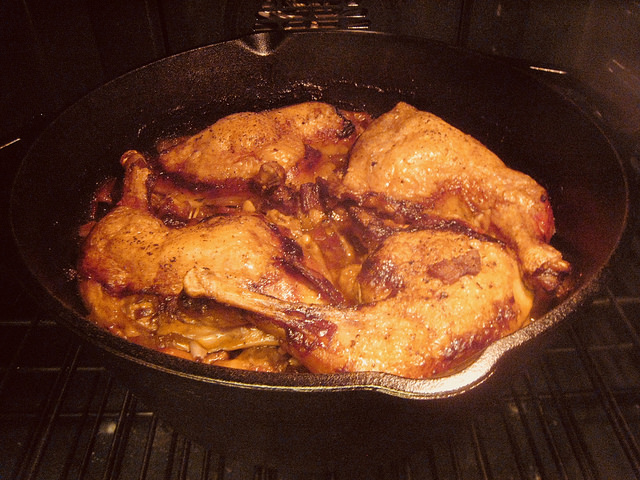
Cassoulet

This is a dish that I’ve been wanting to attempt for some time, but the prospect of finding duck and preparing the confit was daunting. Fortunately, I ran across this article from the Serious Eats Food Lab explaining that cassoulet shouldn’t be prescriptivist, but is actually a “medieval peasant dish designed to make do with whatever was around.” Writer and Chef J. Kenji López-Alt explains that with so much flavor packed into the cooking liquid you can use chicken and won’t miss the duck. Moreover, in head-to-head tests fresh poultry was actually juicier in cassoulet than the preserved duck, since it was cooked only once.

I did take some other liberties with the recipe, substituting thick cut bacon for the salt pork, and leaving the vegetables in. I also left out the cloves and added a few other spices, and some diced tomatoes.

I started at about 9 AM, frying up a pound of hickory smoked bacon in the Dutch Oven. Once it was removed, I seasoned four chicken leg quarters with pepper, and cooked them in the bacon fat, two at a time, skin side down first for 6 minutes, then the other side for 3 minutes or so. Next I browned some mild Italian sausages.

I drained all but a few tablespoons of fat from the pot, and sautéed chopped onion, carrot and celery, adding a few cloves of minced garlic after a few minutes. Just a little red wine went in to deglaze, then came a pound of small white beans that had been soaking overnight in salt water, some bay leaves, thyme, rosemary, and paprika, a can of diced tomatoes, and a quart of chicken stock with three packs of Knox unflavored gelatin dissolved in it. This simmered, covered on the range top for 45 minutes.

The bacon and sausages went in next, and the chicken nestled on top before the pot was placed in a 300°F oven, uncovered. After a couple hours, I kicked the temp up to 350, and checked every half hour, disturbing the crust with a spoon. The chicken was plenty done after four hours, so I pulled it off to a plate and let everything else cook for one more hour before serving.

I don’t think I’ve ever tasted more tender, juicy or flavorful chicken, and this grownup version of “beanie weenies” is the heart and soul of comfort food – perfect for a dreary, chilly Sunday. We served the meal with Wulff Salad, a couple baguettes, and a very nice Cabernet Sauvignon from Bordeaux.

For dessert, Claudia made chocolate mousse with fresh whipped cream. Absolutely incredible.

Chocolate Mousse

When I think of “French Cooking” in the abstract, it seems so high tone and refined and snooty. But it turns out that my favorite French dishes (coq au vin, beef bourguignon, cassoulet) are all hearty peasant food. This meal did take some planning and quite a bit of work to prepare (more than two hours before it was assembled and in the oven), but it was certainly worth the trouble.

Our favorite local butchers, Southside Meats, do carry duck, so I’ll be tempted to try it next time. Although at 99 cents a pound, the chicken will be pretty hard to beat. 🙂
Aloo Gobi

Weeknight Meals – 12 April 2018

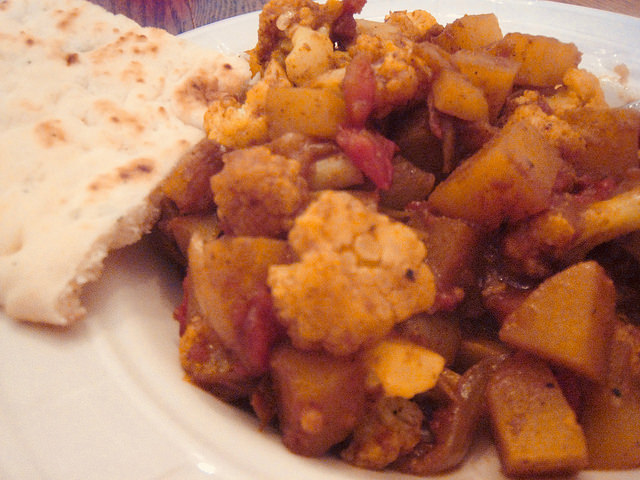
Aloo Gobi

We had a head of cauliflower that needed to be used, and lots of potatoes, so Claudia decided to make a curry that we used to enjoy at the Hindu Cultural Center in Park Forest. When we were first dating and I would come to visit her on weekends, we would drive there some times on Sunday mornings for yoga, inspirational talks and home cooked Indian food.

Luckily, we had all of the spices necessary for the dish, including garam masala, curry powder, turmeric, mustard seed and cumin. We also had some garlic naan on hand, which was the perfect accompaniment. She put the meal together in about half an hour, and it was absolutely delicious. The house smelled like heaven.

My sons and their friend, Christy, were traveling through town that evening and dropped by. They are vegetarians, so it was nice to be able to offer them this super tasty vegan meal as well.

Steakhouse and Supper Club Fare

Sunday Dinner – 8 April 2018

Supper Club Relishes

This Sunday was Claudia’s parents’ wedding anniversary, so we decided to celebrate by grilling steaks.

The rest of the family went to a children’s production of our local theater group. I wasn’t interested in this particular show, so I stayed home and prepared dinner.

Wisconsin Supper Club CookbookThe main course menu was t-bones, baked potatoes, asparagus and salad, but I also decided to do a traditional “supper club relish tray.” The Easter Bunny brought me a copy of Mary Bergin’s Wisconsin Supper Club Cookbook, and there were several recipes I could barely wait to try.
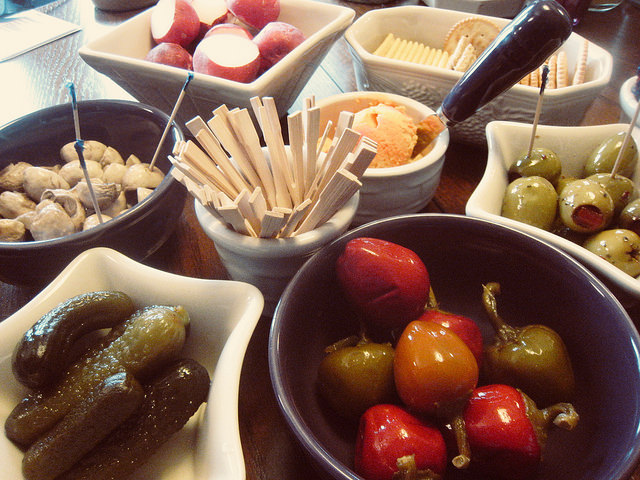
The big hit was marinated olives from the Chippewa Inn. I drained a jar of pimiento stuffed olives, and added minced garlic, some olive oil, some balsamic vinegar, a little sugar, oregano, basil, red pepper flakes and dry vermouth.

I also fixed the cocktail mushrooms recipe from No No’s Supper Club. After blanching a pound of white button mushrooms for a couple minutes, I simmered some vinegar, sugar, garlic salt, Worcestershire and Tabasco and poured it on. These turned out just a little sweet for our taste, but Aunt Pat loved them and took the leftovers home.

The rest of the relishes were sweet cornichons, radishes (served with Lawry’s salt), pickled cherry peppers, and cold pack port wine cheese with crackers.

Sunday Dinner 040818

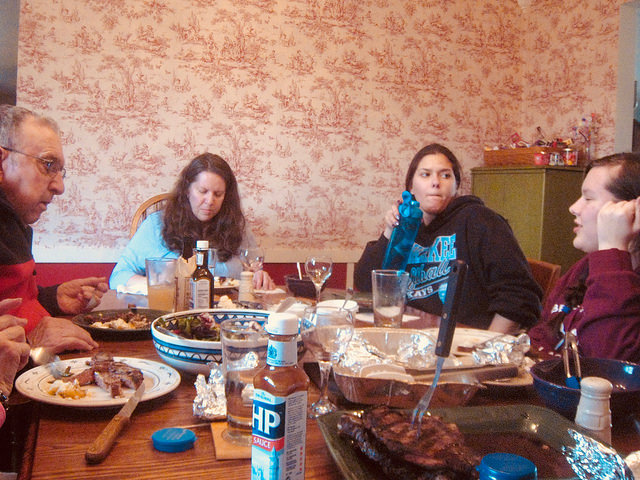
Our Jewel had t-bone steaks on sale, and they were each more than 3/4ths of a pound and decent thickness. The Weber Genesis was blazing hot – all four burners got it upwards of 600 °F before I killed the sear station burner – so the steaks cooked quickly. After the first two minutes I rotated them 90 degrees for quadrillage, and then flipped them after another two, turning the burners down to medium. Two more minutes and they came off to rest a bit before serving.

I’d also done baking potatoes, using our typical method of coating with olive oil spray, kosher salt and pepper before wrapping in foil to bake. We served them with whipped cottage cheese (another recipe from the Bergin book, courtesy of the White Stag Inn). It’s simply cottage cheese, chives and Lawry’s Seasoned Salt whipped up in a blender. This was another hit around the table, with several folks saying they preferred it to sour cream.

I also grilled some asparagus with olive oil, salt and pepper for about 15 minutes, and served it with doctored Knorr’s Hollandaise. Yes, I am still too timid to make the sauce from scratch. Shudder if you must. Claudia made another nice Wulff Salad to round out the meal. The wine was a 2011 Alambrado Malbec from Argentina.

Claudia’s niece, Emily, joined us this week as well, along with our usual crew, the folks and Aunt Pat. After dinner, the two older ladies had Brandy Alexanders and the two younger ones had Pink Squirrels, which are getting to be a fixture here on Sundays. Dessert was a peach pie and DQ soft serve that Pat brought.

This turned out to be a meal where I really needed (and got) a nap afterwards.

I’m still making my way through the supper club book, and look forward to trying some of the mains and sides. We’ll definitely keep this meal’s recipes in our repertoire.

Easter Brunch and Dinner 2018

Easter Brunch

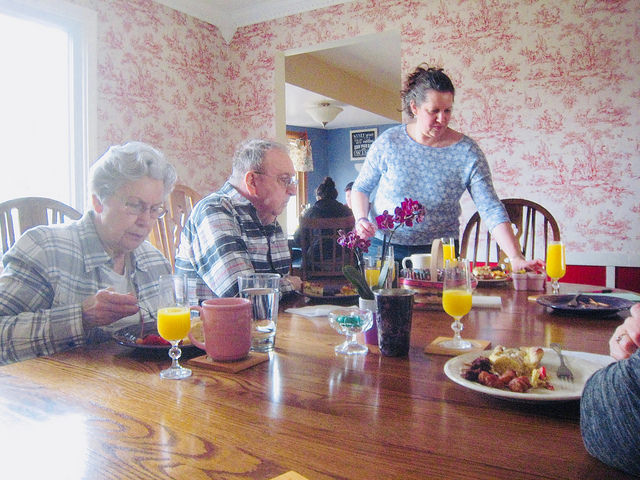
We had Claudia’s folks and her sister’s family over for Easter this year. We started with Mimosas and Bloody Marys, and enjoyed a marvelous brunch including egg casserole, Kiełbasa, fresh fruits, baked goods and more.

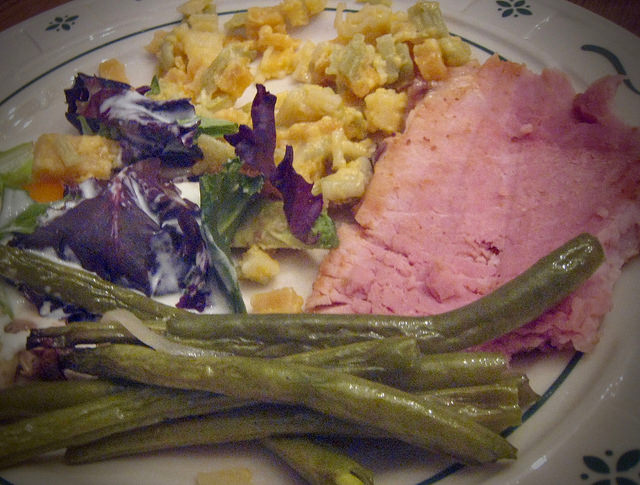
Later in the day, we served ham, green beans, pasta and Wulff Salad.

Easter Ham

The salad, by the way, is named for Claudia’s mom’s family. She learned to prepare this simple vinaigrette growing up. It’s unique in that the ingredients are added directly to the greens, one-by-one, rather than combining in a cruet first. It includes oil (she generally uses EVOO these days, but it could be any vegetable oil), vinegar (usually balsamic or red wine), salt, pepper and a bit of sugar. Nothing is measured, so far as I can tell.

I cook the ham on the grill each year, using Jamie Purviance’s Mustard-Molasses Glaze recipe from Weber’s Real Grilling. The first time I made this glaze, Claudia commented that it smelled like her grandma’s kitchen, which is about the highest compliment one can receive. Here’s the recipe.

  • ½ cup stone-ground mustard
  • ¼ cup unsulphured dark molasses
  • ¼ cup fresh orange juice
  • 1 teaspoon ground ginger
  • ¼ teaspoon ground cloves

Combine these in a saucepan and simmer a bit.

Score a 10 pound, bone-in (butt end) cooked ham with cross hatches, and place it cut side down in a foil pan. I add a can of 7-Up or ginger ale to the pan, and grill over indirect medium heat for two or three hours, brushing with the glaze after an hour or so, and again toward the end of the cook. This year I cooked it on the Weber Genesis gas grill, adding a few chunks of apple wood to the smoker box.

Claudia had baked an assortment of sugar cookies and almond/oat cookies. And of course, there were hard boiled eggs galore.

I had been sick the prior week and had barely been eating, so I overdid with all of the delicious goodies in the morning, and didn’t really get to enjoy dinner. But the ham was wonderful for days on end. Claudia made grilled ham and Swiss sandwiches Monday evening, and we used the bone to flavor some incredible split pea soup later in the week.

The Spinning Bird

Sunday Dinner – 25 March 2018

Rotisserie Chicken with PotatoesThis week for Sunday Dinner we prepared one of our favorites, Rotisserie Chicken with Drip Pan Potatoes. Aunt Pat was having problems with her knee, and I seem to have come down with the flu, so it wasn’t the most festive meal, but Grammy and Grampy did join us, and everyone seemed to enjoy the food.

I have been cooking on a Weber Kettle for decades, but it’s really only the past few years that I’ve had any clue what I was doing. My education came in the form of a rotisserie attachment that Claudia gave me one year for Christmas. Since I had no idea how to use it, I had to do quite a bit of research. Luck brought me to a guy named Mike Vrobel, and his excellent book Rotisserie Grilling. By learning to cook with the rotisserie, I became a better outdoor cook all around. For instance, I had never used a thermometer to test for doneness before. No wonder I had inconsistent results for thirty years.

Dry brined chicken was one of the first things I learned to prepare on the rotisserie, and, though simple, it remains one of the most delicious dishes I’ve ever tasted. Prep involves seasoning the bird, inside and out, with kosher salt, ground black pepper, garlic and onion powder and Herbs de Provence. Then we leave it, uncovered, in the refrigerator for a few hours (or overnight).

The grill is set up with a full chimney of charcoal, distributed in a horseshoe pattern around a foil drip pan. This time around we used a couple chunks of apple wood for smoke. The bird is trussed and skewered, and placed on the rotisserie with the legs pointing toward the closed end of the coals, breast toward the open end. This helps to cook the thighs well while not overcooking the white meat.

Claudia prepared about three pounds of potatoes, cutting them into 8ths, coating with olive oil, salt and pepper, and par cooking in the microwave for five minutes. After the chicken had spun for about half an hour, the potatoes went into the drip pan, soaking up all the nice schmaltz dripping from the bird.

This was a fairly large roaster (about 6 1/2 pounds) so I figured it would need to cook about an hour and a half. I began checking the temperature in the breast after the first hour. By the time the coals were mostly gone, it had still only reached 145 °F, so I placed it on top of the potato pan and moved everything to the Genesis gas grill to finish cooking over indirect medium heat. Once it hit 165, we brought it in and let it rest under a tent of foil.

We served this meal with steamed broccoli and lemon, and Wulff Salad. The wine was a Scott Peterson Rox Chardonnay.

Roast chicken is a Sunday Dinner classic, and you’ll never taste any better than what comes off the rotisserie. I’ve often said that if I had ever opened a restaurant, I’d want to have called it “The Spinning Bird.”