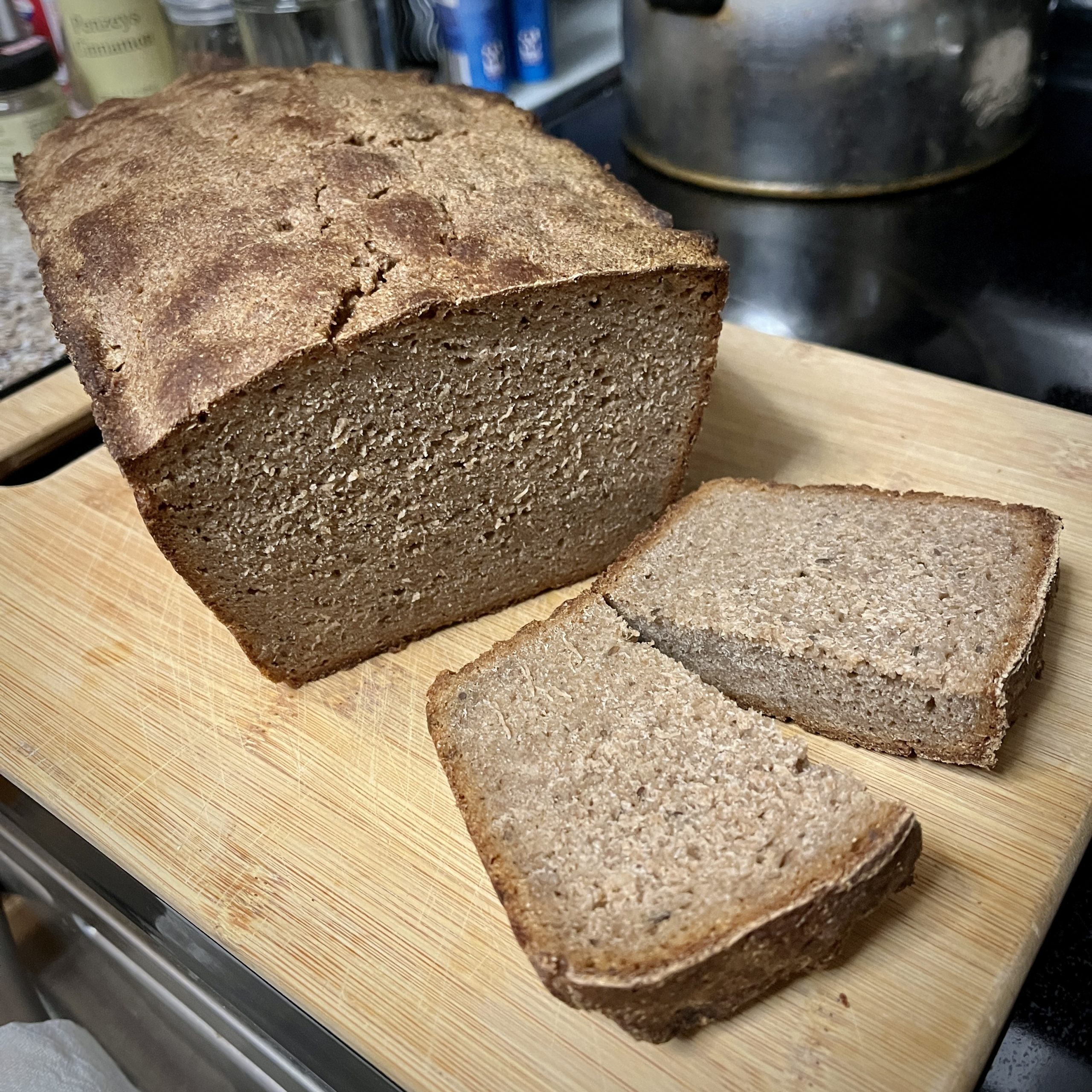
Traditional Lithuanian Sourdough Rye Bread

Lithuanian Rye Bread Sliced on a BoardOn a day trip to Chicago recently, we stopped at the Michigan Avenue satellite location for the Balzekas Museum of Lithuanian Culture. Claudia’s grandmother was from Lithuania, so the country and its food and culture are always of interest to us.

Of course, we came home with a cookbook. The two things that interested me most were Kugula and bread.

The bread recipe in the book was fairly sparse, assuming that one already had a sourdough starter, so I had to research the best way to approach culturing one. I was lucky to find this guide from the Sourdough Archive site. I ordered some Dark Organic Rye Flour from Bob’s Red Mill, and got started. I had some experience with developing starters from wheat (and gluten-free sources as well), so the process wasn’t totally unfamiliar, though my success in creating finished products made with sourdough had been mixed.

Here’s how the starter looked on the morning of day four.
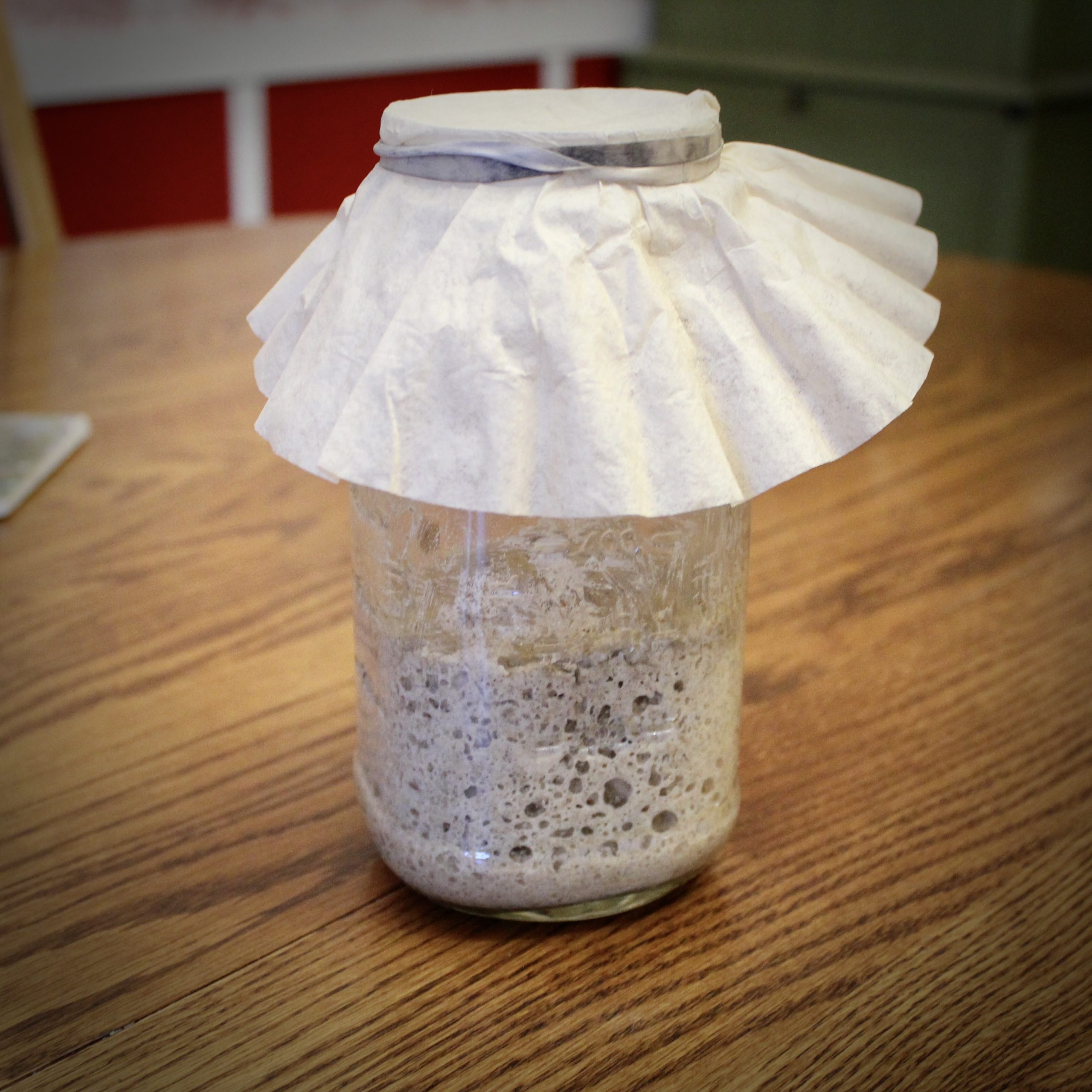
Rye Sourdough Starter

After a little more than a week of training the starter, it was time to bake. Although a lot of the material I read cautioned against baking with anything over 40% Rye Flour on the first attempt, I wanted to follow the recipe from the cookbook (100% Rye) as closely as possible.

I fed the starter on Sunday Morning and after it rose a bit prepared the “sponge” (preferment) of 100 grams starter, 300 grams of flour and 400 ml of water. This went into a warm spot to rise overnight. Monday Morning I mixed the dough,  adding 700 grams of flour, 300 ml of water, 2 T honey, 2 T Caraway Seeds and 1 T salt and mixing it well. The dough went into a greased bread pan to rest and rise in a warm spot for four or five hours. I poked holes in the top using a chopstick to avoid what the Lithuanians call “flying roof” when it baked.

I baked it at 425 °F for fifteen minutes, then at 350 °F for another hour. It released from the pan easily, and I brushed the top with water as the recipe suggested.
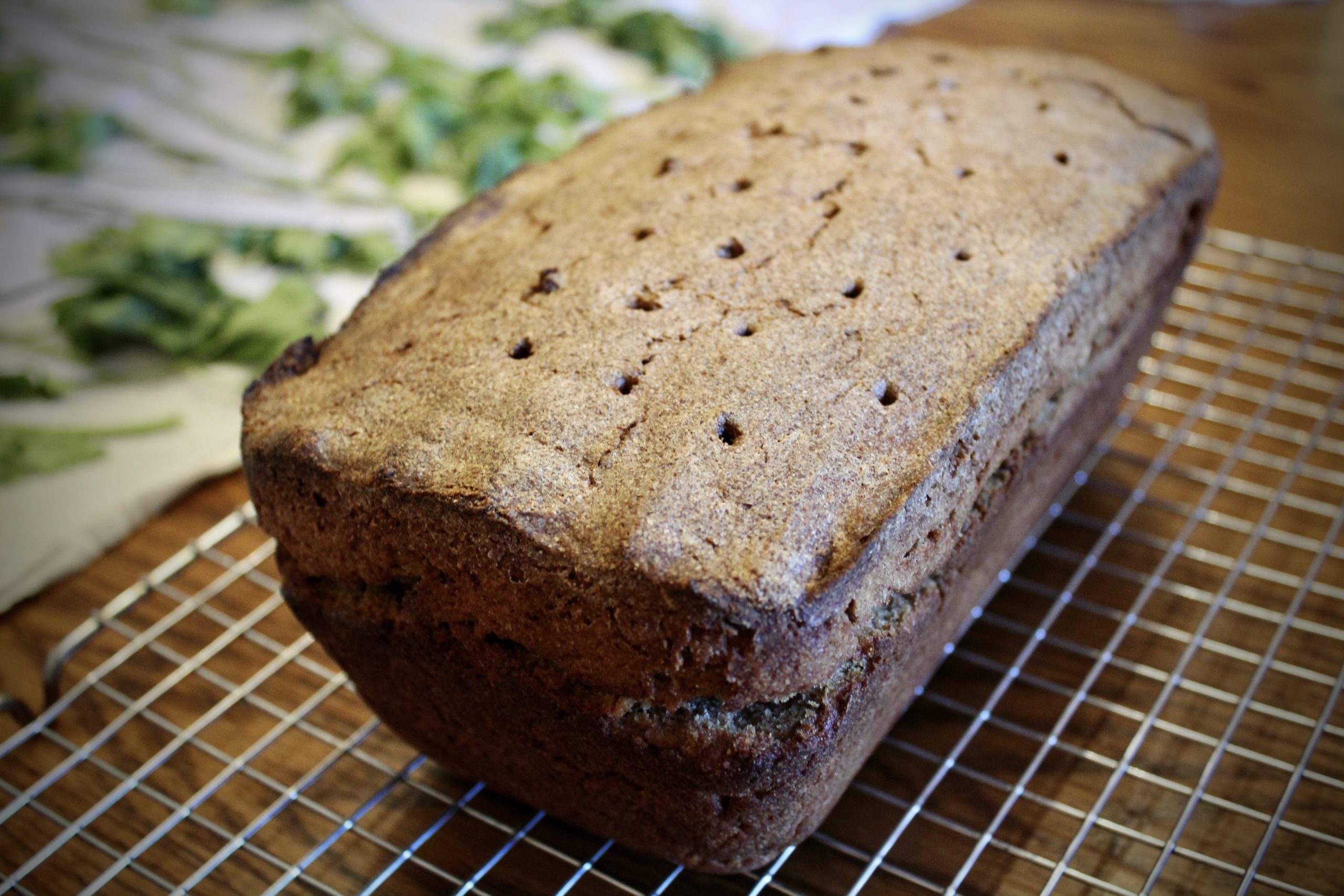
Freshly Baked Loaf of Lithuanian Rye Bread

After it cooled, I wrapped the loaf in a wet towel to rest overnight before slicing.

I have always loved what might best be described as peasant food. This Lithuanian Rye Bread ticks all the boxes. Simple ingredients yield a thing of rich, dense, complex goodness.

Simple, Perfect Bread

Simple Peasant Boule

I made cheese soup for Sunday Dinner this week, and baked a nice peasant boule to go with it.

The cheese soup recipe is one my sister gave me many years ago. It was one of the specialty dishes of a restaurant in the town where we grew up (The Brown Jug in Decatur, Illinois). It’s one of my favorites, especially during the autumn and winter, with cooler weather.

The bread is the master recipe from Artisan Bread in Five Minutes a Day. Claudia had requested the book for Christmas many years ago, but didn’t really get into it. At some point I became interested in trying to rely less on “manufactured food” and picked up the book, thinking that I would bake bread for us every day.

I haven’t picked up that habit yet, but I do love the way these loaves turn out, and nothing could be much simpler to make, once you get your hands on a Danish Dough Whisk, a wooden peel and a baking stone (which are all pretty necessary to the process).

I used 5 1/2 cups of all purpose flour and 1 cup of whole wheat. That gets stirred together with 3 cups of lukewarm water, and 1 1/2 tablespoons each of kosher salt and yeast. Once it rises overnight, I’m ready to bake, and the dough that’s left will keep in the refrigerator for a week or two. I usually get three or four nice sized boules per batch.

One of these days, I’d like to try my hand at sourdough. Claudia gave me a copy of the Tartine Bakery’s book, and I may delve deeper into it one of these days. But it is honestly hard to beat the AB5 bread for ease of preparation, time invested, and the simple, delicious beauty of the finished product. It has the combination of chewy crumb and crunchy crust that I adore, and the addition of some whole wheat flour, or whole wheat and a little rye, gives it just enough funk for my taste.

The bread board was my mother’s, and I believe that it had originally been her grandma’s, so it is likely over 100 years old. It’s something else that I love for its simple beauty.

Cassoulet

Sunday Dinner – 15 April 2018

Cassoulet

This is a dish that I’ve been wanting to attempt for some time, but the prospect of finding duck and preparing the confit was daunting. Fortunately, I ran across this article from the Serious Eats Food Lab explaining that cassoulet shouldn’t be prescriptivist, but is actually a “medieval peasant dish designed to make do with whatever was around.” Writer and Chef J. Kenji López-Alt explains that with so much flavor packed into the cooking liquid you can use chicken and won’t miss the duck. Moreover, in head-to-head tests fresh poultry was actually juicier in cassoulet than the preserved duck, since it was cooked only once.

I did take some other liberties with the recipe, substituting thick cut bacon for the salt pork, and leaving the vegetables in. I also left out the cloves and added a few other spices, and some diced tomatoes.

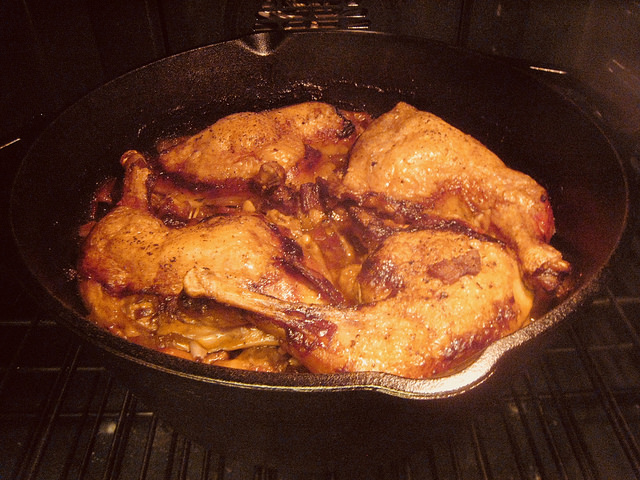
I started at about 9 AM, frying up a pound of hickory smoked bacon in the Dutch Oven. Once it was removed, I seasoned four chicken leg quarters with pepper, and cooked them in the bacon fat, two at a time, skin side down first for 6 minutes, then the other side for 3 minutes or so. Next I browned some mild Italian sausages.

I drained all but a few tablespoons of fat from the pot, and sautéed chopped onion, carrot and celery, adding a few cloves of minced garlic after a few minutes. Just a little red wine went in to deglaze, then came a pound of small white beans that had been soaking overnight in salt water, some bay leaves, thyme, rosemary, and paprika, a can of diced tomatoes, and a quart of chicken stock with three packs of Knox unflavored gelatin dissolved in it. This simmered, covered on the range top for 45 minutes.

The bacon and sausages went in next, and the chicken nestled on top before the pot was placed in a 300°F oven, uncovered. After a couple hours, I kicked the temp up to 350, and checked every half hour, disturbing the crust with a spoon. The chicken was plenty done after four hours, so I pulled it off to a plate and let everything else cook for one more hour before serving.

I don’t think I’ve ever tasted more tender, juicy or flavorful chicken, and this grownup version of “beanie weenies” is the heart and soul of comfort food – perfect for a dreary, chilly Sunday. We served the meal with Wulff Salad, a couple baguettes, and a very nice Cabernet Sauvignon from Bordeaux.

For dessert, Claudia made chocolate mousse with fresh whipped cream. Absolutely incredible.

Chocolate Mousse

When I think of “French Cooking” in the abstract, it seems so high tone and refined and snooty. But it turns out that my favorite French dishes (coq au vin, beef bourguignon, cassoulet) are all hearty peasant food. This meal did take some planning and quite a bit of work to prepare (more than two hours before it was assembled and in the oven), but it was certainly worth the trouble.

Our favorite local butchers, Southside Meats, do carry duck, so I’ll be tempted to try it next time. Although at 99 cents a pound, the chicken will be pretty hard to beat. 🙂