Rotisserie Chicken

Rotisserie Chicken

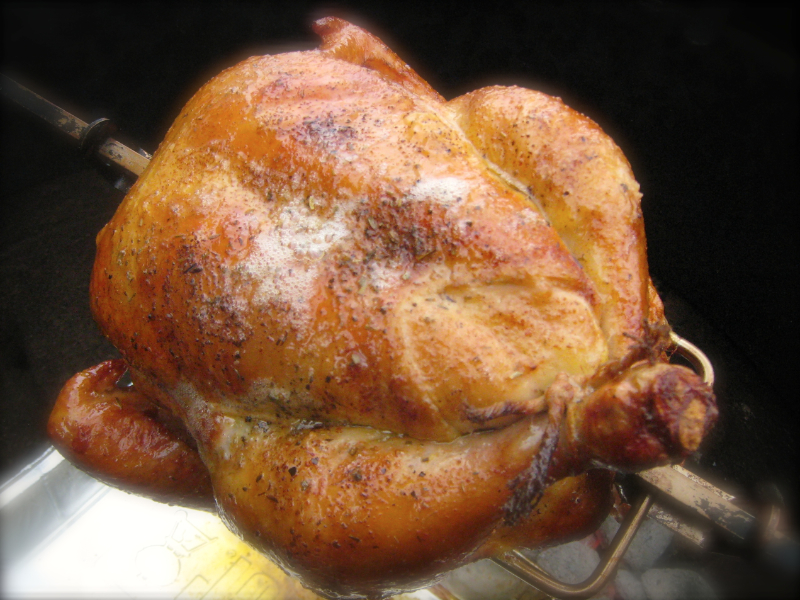
When my wife gave me a rotisserie attachment for our Weber Kettle at Christmas 2012, the first thing I cooked on it was a whole chicken. After a year of experience, I think I’ve finally mastered the process.

I cooked a five pound chicken for Sunday dinner this week, and it turned out better than any I’ve ever made or tasted. I dry brined with salt and pepper on Saturday evening, then sprinkled on some Herbs de Provence and garlic powder before it went on the grill. It took a little over an hour to cook. We served it with drip pan potatoes, salad and green beans.

Learning this recipe changed my entire approach to cooking on the Weber. If you’re interested in the rotisserie, take a look at Mike Vrobel’s blog. His book is the bible on rotisserie cooking outdoors.
Ham-Wrapped Asparagus Batons

Ham-Wrapped Asparagus Batons

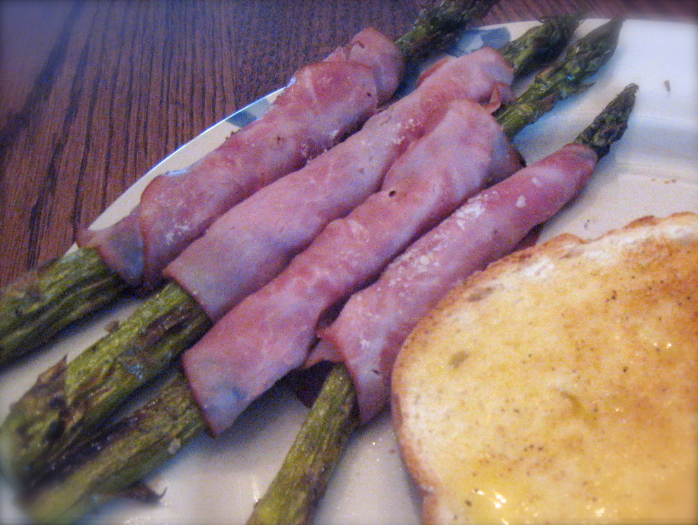
For Sunday Brunch this morning, I grilled some asparagus wrapped in ham.

I put the asparagus on a perforated Weber grill pan, hit it with some olive oil spray and sprinkled with kosher salt and cracked black pepper. Grilled it for five minutes or so that way (flipping the asparagus over once) and then sprinkled with Parmesan cheese before wrapping in the ham. Then it all went back on the grill for just a few more minutes to finish.

We served it with a drizzle of Dijon mustard and honey as a condiment, along with some toast and fresh fruit.

Simple and delicious.

Chorizo and Pork Burgers

Chorizo Pork Burgers

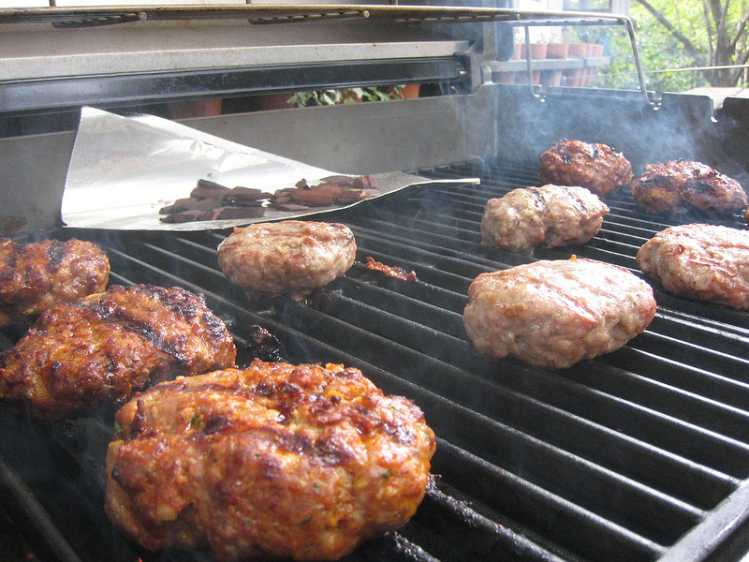
Here’s another recipe from Chef Purviance that I’ve grilled twice in the past few months, most recently for Sunday Dinner. I don’t make the Jalepeno slaw, but the Chorizo/Pork burgers are a delightful departure from typical burger fare. I also make some of the patties without Chorizo for my daughter and others who don’t like as much spice.

Grilled Peaches with Mascarpone

Grilled Peaches with Mascarpone

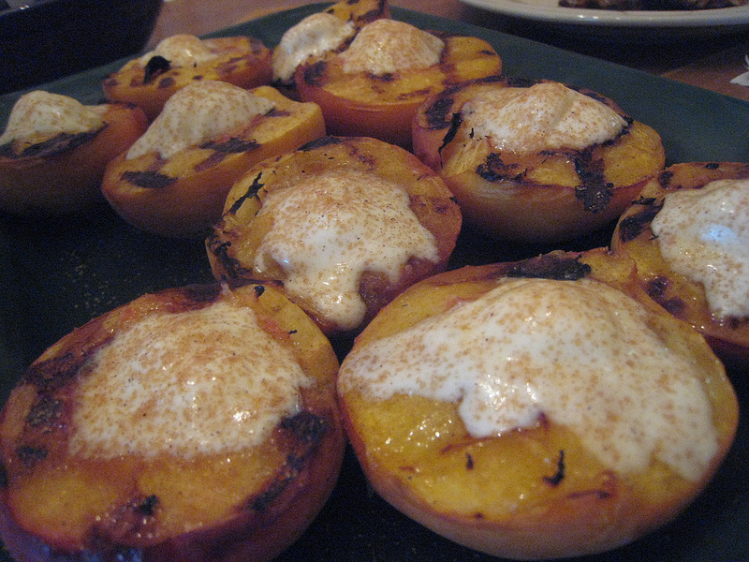
This has been one of our favorite desserts all Summer. I simply sprayed the peaches with a little canola, grilled them for a couple minutes flesh side down, rotated them to get nice grill marks, and then flipped them over and added the Mascarpone and a dusting of cinnamon/sugar. We made these many, many times starting when the early peaches came in.

P.S. – A little drizzle of honey on top doesn’t hurt either.

Smoked Beef Brisket

Smoked Beef Brisket

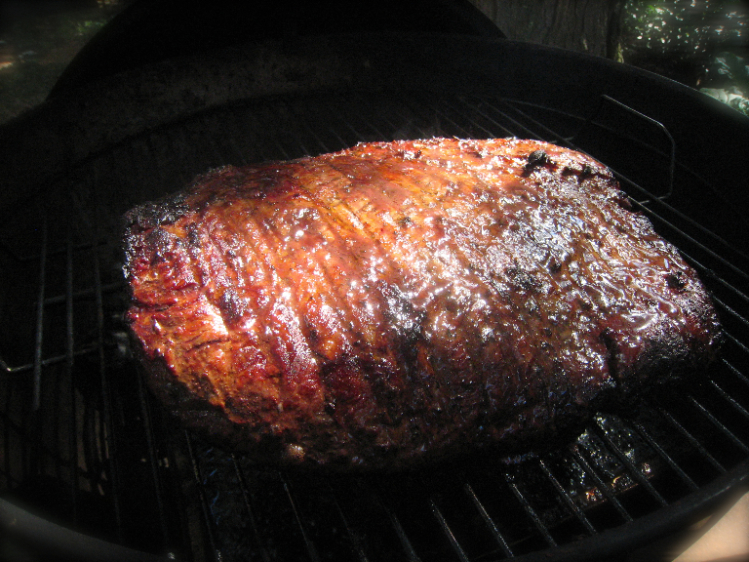
There are several cuts of meat that are almost synonymous with “barbecue” depending on region. In Texas, they’re known for brisket. Considered by some to be “The Mount Everest of Barbecue,” this was the last of the large cuts that I was determined to cook this Summer. As it turned out, we sat down to Sunday Dinner just as Autumn rolled in for 2013.

I prepared the 7.5 pound flat-cut brisket on Saturday evening, salting it, slathering yellow mustard and Worcestershire Sauce on it and then applying a homemade rub of 2 t paprika, 1 t black pepper, 1 T turbinado sugar, 1 t cumin, 1 t garlic powder, 1 t onion powder, 1 t nutmeg and 1t Herbs de Provence. Come Sunday morning I removed it from the refrigerator and set up the Weber Kettle, putting a foil drip pan full of water on one side of the charcoal rack and spreading a chimney full of unlit charcoal on the other side. I then lit about a third of a chimney of additional coals, and poured them on top of the unlit ones, adding some Hickory and Cherry chunks for smoke.

Once the grill was up to temperature, I put the brisket on over the drip pan, fat side up. Using a dual probe thermometer I received for my birthday, I did my best to keep the temperature in the grill to around 250 F, adjusting the vents as needed during four hours of cooking. Every hour or so, I sprayed the brisket with equal parts brewed coffee, dark beer, apple juice and cider vinegar. I also rotated and turned the meat to ensure even cooking. After four hours the meat was measuring 160 degrees, so I pulled it off, wrapped it in foil and put it in the gas grill on indirect heat (again, at 250) to finish. After another hour-and-a-half, the meat had risen to 195 degrees and was ready to come off. We let it rest inside the foil for another hour prior to serving.

It turned out moist and flavorful, though at this point I made a rookie mistake, cutting it with the grain to serve it. My wife noticed this later as she removed the fat cap to store the rest of the brisket. The part that she carved against the grain was much more tender to chew. She poured the juices that we had reserved from the foil packet over the leftovers. The beef was still delicious today for lunch.

We served the beef with grilled asparagus, and a wonderful green bean & red potato salad with Dijon dressing that she made.

Other than proper carving, next time I would use more smoke, more pepper and more salt. Also, I think I might be tempted to cook it just a bit longer in the foil to get it “melt in your mouth” tender. This was good for a first attempt though, and I wouldn’t be intimidated to cook this cut again.