Kugelis (Potato and Egg Casserole)

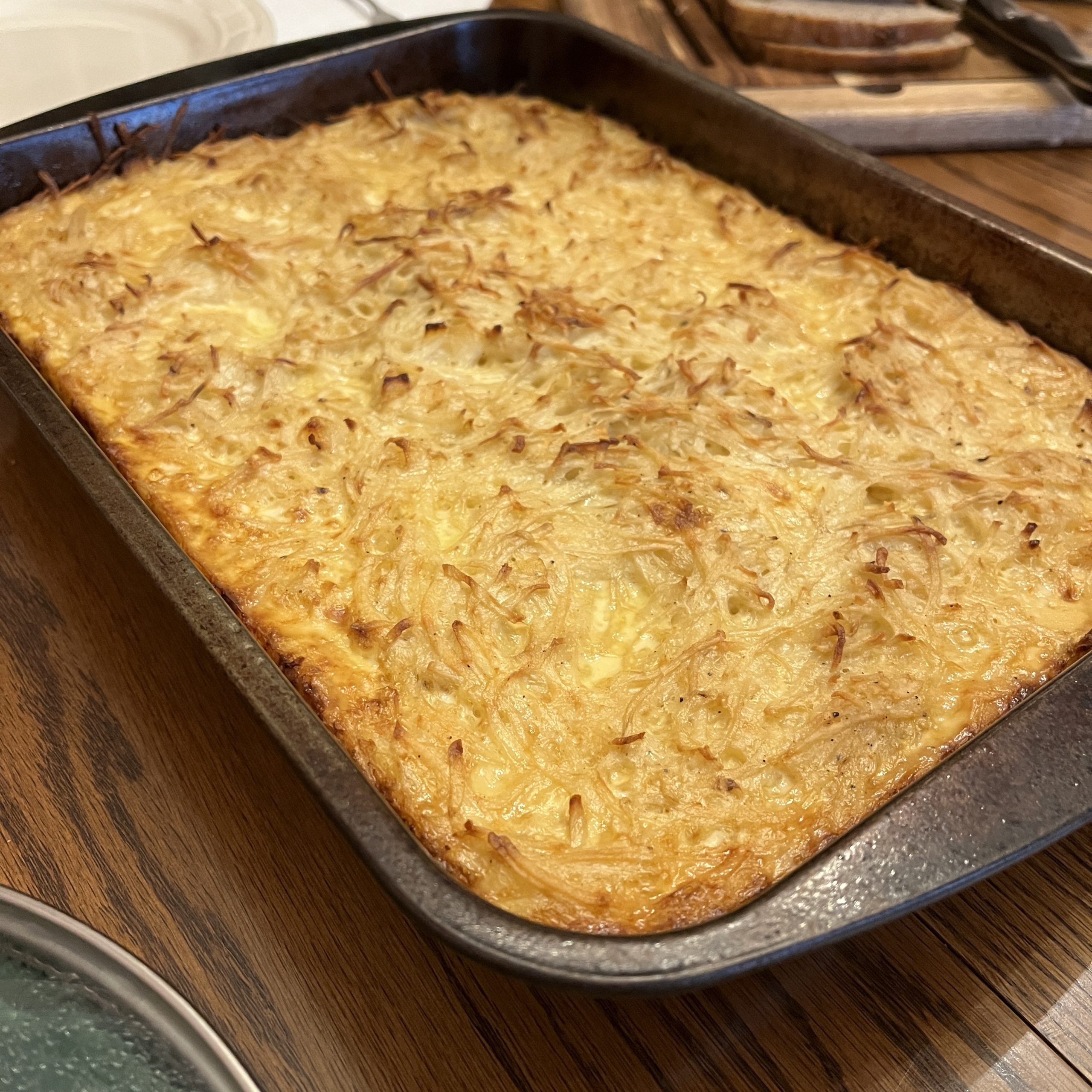
Pan of KugelaAnother classic of Lithuanian cooking is Kugelis (or Kugela) – a casserole or pie made with potato, onion and egg. Typical recipes include bacon, but I left that out and added a little paprika and smoke flavoring.

Ingredients

1 Stick Salted Butter
1 Onion, Chopped
3 Cloves Garlic, Chopped
Salt
Black Pepper
Paprika
Grated Nutmeg
Liquid Smoke Flavoring
5 LBs Red Potatoes, Peeled and Grated
5 Eggs
1 Can Evaporated Milk
Flour

Instructions

Sauté onion in butter, seasoning with salt and pepper. Add garlic and sauté until all is soft and translucent. Add Paprika and Nutmeg.

Soak the grated potatoes in water, rinse, press in colander to remove some of the moisture.

Whisk together eggs, evaporated milk, and a little smoke seasoning.

Combine potatoes and onion mixture in a large bowl. Dust with some flour, add more seasoning if desired, and mix thoroughly. Mix in egg mixture well, and pour it all into a greased 9 x 13 pan.

Bake at 375 °F for 60 – 75 minutes, until top is beginning to brown.

Serve with a dollop of sour cream and some chives.

If you wanted to keep the recipe strictly Vegan, you could sauté the onions and garlic in olive oil, and substitute a little oat milk for the evaporated dairy milk.
Traditional Lithuanian Sourdough Rye Bread

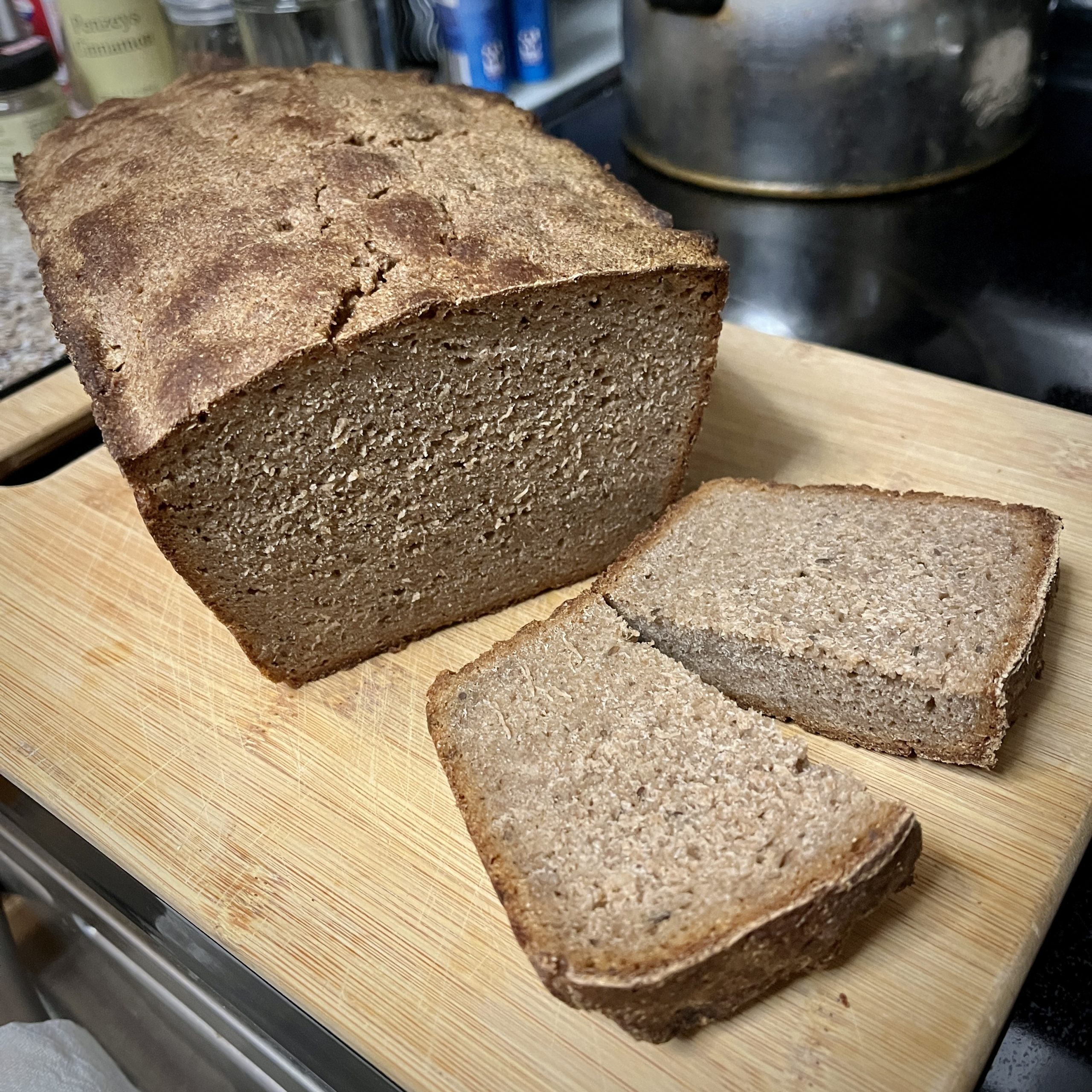
Lithuanian Rye Bread Sliced on a BoardOn a day trip to Chicago recently, we stopped at the Michigan Avenue satellite location for the Balzekas Museum of Lithuanian Culture. Claudia’s grandmother was from Lithuania, so the country and its food and culture are always of interest to us.

Of course, we came home with a cookbook. The two things that interested me most were Kugula and bread.

The bread recipe in the book was fairly sparse, assuming that one already had a sourdough starter, so I had to research the best way to approach culturing one. I was lucky to find this guide from the Sourdough Archive site. I ordered some Dark Organic Rye Flour from Bob’s Red Mill, and got started. I had some experience with developing starters from wheat (and gluten-free sources as well), so the process wasn’t totally unfamiliar, though my success in creating finished products made with sourdough had been mixed.

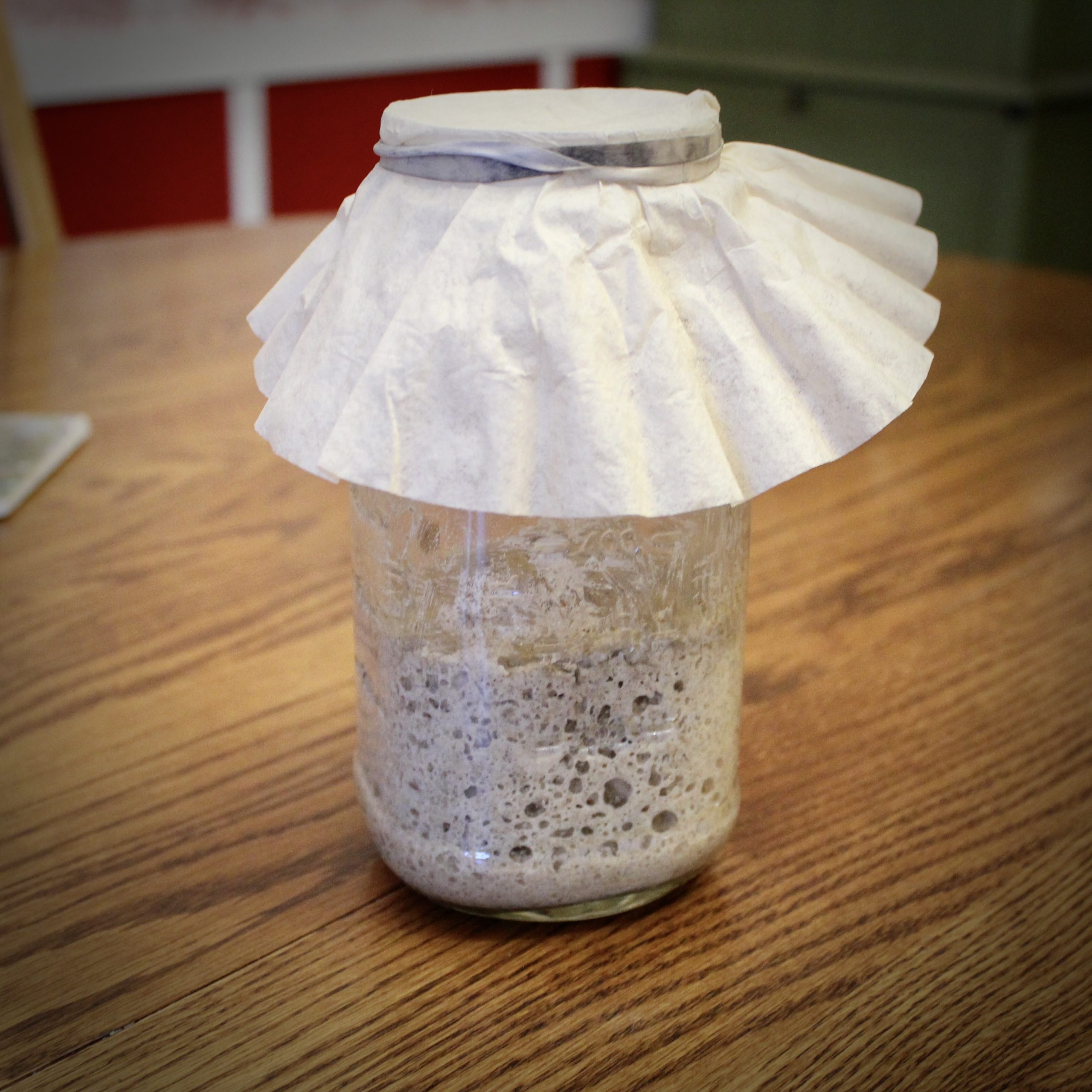
Here’s how the starter looked on the morning of day four.

Rye Sourdough Starter

After a little more than a week of training the starter, it was time to bake. Although a lot of the material I read cautioned against baking with anything over 40% Rye Flour on the first attempt, I wanted to follow the recipe from the cookbook (100% Rye) as closely as possible.

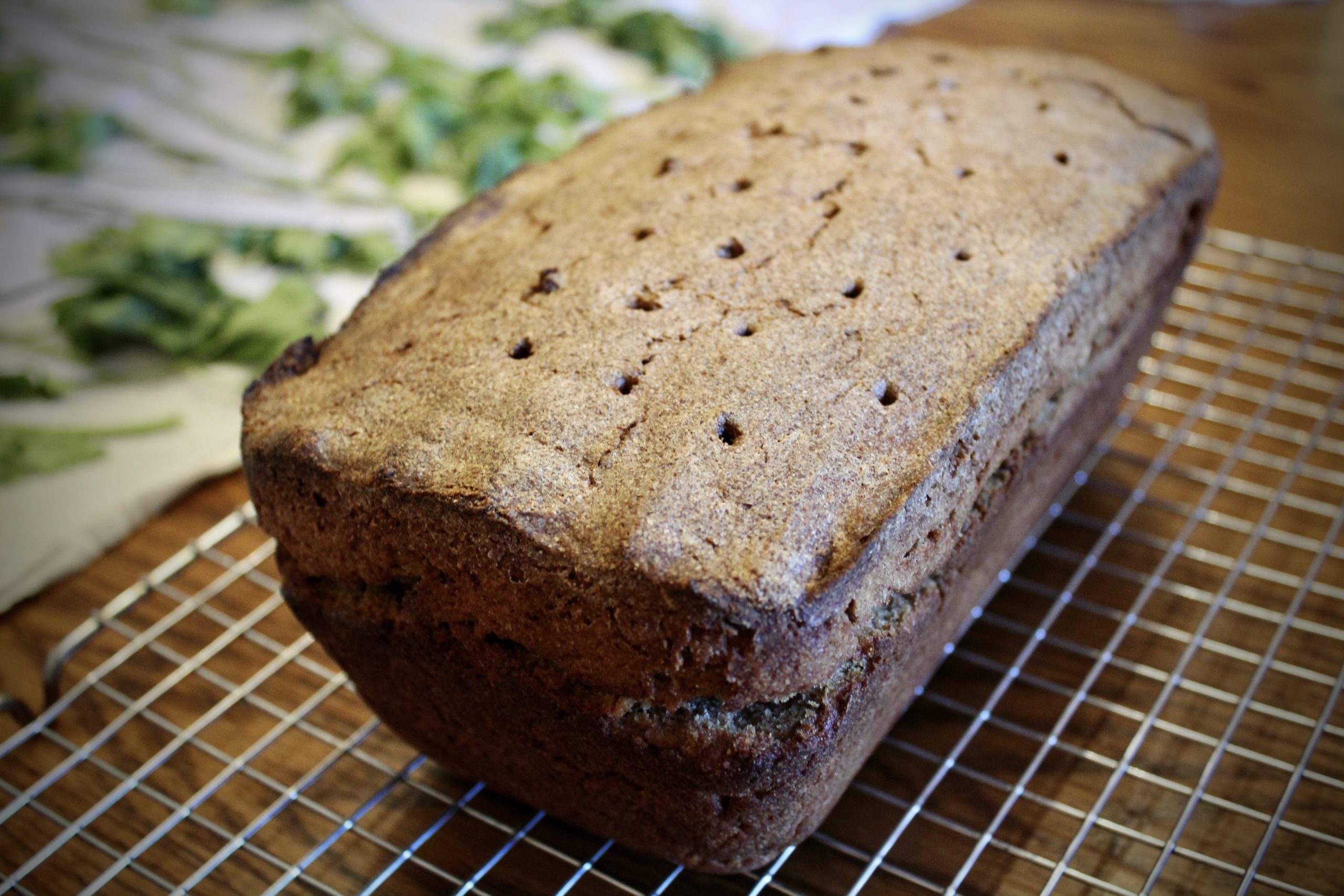
I fed the starter on Sunday Morning and after it rose a bit prepared the “sponge” (preferment) of 100 grams starter, 300 grams of flour and 400 ml of water. This went into a warm spot to rise overnight. Monday Morning I mixed the dough,  adding 700 grams of flour, 300 ml of water, 2 T honey, 2 T Caraway Seeds and 1 T salt and mixing it well. The dough went into a greased bread pan to rest and rise in a warm spot for four or five hours. I poked holes in the top using a chopstick to avoid what the Lithuanians call “flying roof” when it baked.

I baked it at 425 °F for fifteen minutes, then at 350 °F for another hour. It released from the pan easily, and I brushed the top with water as the recipe suggested.

Freshly Baked Loaf of Lithuanian Rye Bread

After it cooled, I wrapped the loaf in a wet towel to rest overnight before slicing.

I have always loved what might best be described as peasant food. This Lithuanian Rye Bread ticks all the boxes. Simple ingredients yield a thing of rich, dense, complex goodness.